
Small-scale partnerships in vocational education and training (2024-1-EL01-KA210-VET-000257154).
To keep our community informed, a dedicated progress page has been created where you can follow all project updates, milestones, publications, and ongoing development insights.
—————————————————————-
🔗 View the official GenNZ Project Progress page:
https://eurosustainability.org/gennz-project-progress.php
The page is regularly updated and includes:
- Current project status and achievements
- Information about partner institutions
- Documentation of workshops, meetings, and training sessions
- Materials, tools, and reports developed within the project
- Announcements about upcoming activities and results
—————————————————————-
Partners:
Project Leader, European Sustainability Academy, Vocational Education, Greece
Entrepreneurship Movement Club (EMC), SME, Slovenia
Objectives:
HORIZONTAL: Environment and fight against climate change
VET: Adapting vocational education and training to labour market needs
VET: Increasing the flexibility of opportunities in vocational education and training
Topics:
- Overcoming skills mismatch and addressing the needs of the labour market
- Green skills
- Work-based learning
Key aims:
The aim of the GenNZ project is to address the clarification of what ‘green skills’ are with a specific focus on roles in the tourism & related hospitality sector.
The overarching objective is to develop a complete, ready to use, ‘green skills’ vocational competencies framework and teaching programme, with assessment & micro-credentials, which is grounded in workplace reality. This is to address the gap between VET green skills development & fast-changing world of work towards net zero
GenNZ Project Activities:
1. Research and scoping study. A survey to identify the status quo and skills matching gap (September – October 2024).
2. Green Skills Focus Groups of experts and practitioners to inform the VET design (November – December 2024).
3. Training module design with workplace learning and evidence based assessment (January – April 2025).
4. Training pilot activation – summer school with access to tourism workplaces (May – June 2025).
5. Post pilot workshops and dissemination in Greece and Slovenia (July- August 2025).
6. Project closing conference and evaluation (September 2025).
Planned GenNZ Outputs:
1. Research and scoping study – a publishable document and policy guide
2. Green skills analysis – Regional/National
3. KSB Competencies framework with a standard for evaluation, assessment, microdredentials.
4. Piloted training module and materials to teach the framework
5. Green skills network and community of practice (with all target groups) through social media outreach and workshops
6. Evaluation report. Recommendations, with KPIs, & roadmap for future VET green skills apprenticeship
The GenNZ project is a pioneering Erasmus+ initiative uniting two countries and their unique strengths—ESA’s sustainability leadership in Greece and EMC’s deep reach and experience in youth skills training and entrepreneurship in Slovenia. EMC was invited as a project partner for its proven record in practical education, coaching, and building vibrant professional communities. With EMC as Slovenia’s GenNZ leader, Slovenian tourism and hospitality professionals are positioned at the forefront of the green transition.
Project Vision and Ambition
GenNZ aspires to create a ready-to-use framework for green skills and vocational competencies in tourism and hospitality, including practical assessments and cutting-edge micro-credentials. This framework is designed to be adaptable, scalable, and highly relevant to the realities of the European workplace as it transitions to a net-zero economy.
Our mission:
- Bridge the gap between vocational education and fast-changing workplace needs.
- Empower individuals – from students and young entrepreneurs to experienced professionals and educators – to thrive in green, sustainable careers.
- Build strong, cross-border networks for innovation and mutual support in the face of climate and market challenges.
Recognition and Quality of the project
Our project application achieved the second-highest quality score in Greece (90/100), reflecting our partnership’s credibility and the project’s relevance. EMC’s role ensures that Slovenian expertise, best practices, and regional needs are integrated throughout every project activity, from research to impact assessment.
The GenNZ Story: Roots and Foundations
Pre-Project Research:
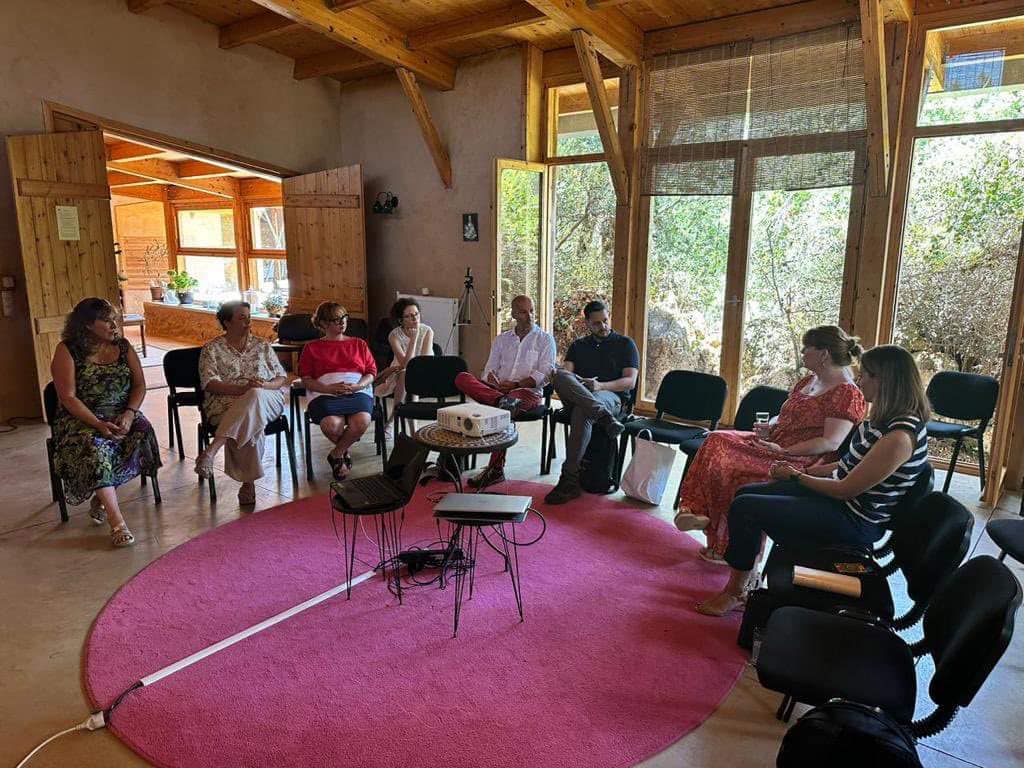
The groundwork for GenNZ was laid through collaborative research on the future of sustainable tourism in Greece, requested by the British Embassy in Athens and continued with the British Council. This research, coupled with management skills studies with the UK’s Chartered Management Institute, shaped the academic foundation of the GenNZ project.
Sharing and Growth:
Findings were shared at the 2024 CST conference in Portugal, culminating in an open-source publication in January 2025. This research not only informed GenNZ’s initial scoping study but also connected EMC and ESA to global best practices and thought leaders.
Project Kick-Off: Building International Synergy
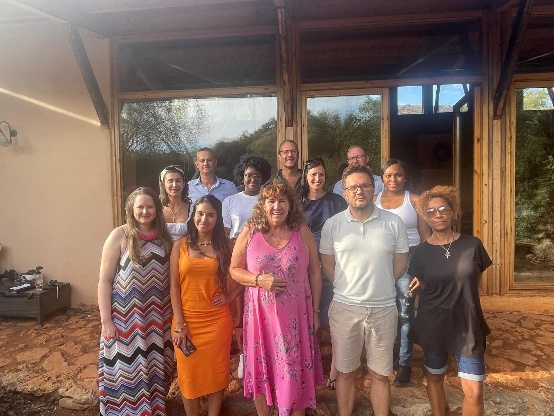
In September 2024, EMC President joined ESA’s founder in Crete for the official GenNZ kick-off. By aligning this with ESA’s “Sustainability Activators” event, GenNZ leveraged synergies for early engagement with key stakeholders – creating a dynamic platform for cross-pollination of ideas between Greek and Slovenian innovators.
Local Impact, Global Vision:
This kick-off ensured that GenNZ’s approach is not just top-down, but deeply embedded in community needs, business realities, and regional opportunities. Stakeholder feedback from this event has already shaped how the project is communicated and implemented.
Activity 1: Research & Scoping Study
Comprehensive Literature Review:
GenNZ’s first phase involved a deep dive into the status of green skills in Slovenian and Greek tourism, examining not only current practices but also emerging gaps and future needs. EMC played a critical role in contextualizing findings for the Slovenian environment, highlighting both opportunities and barriers.
Key Findings:
- A significant lack of green management skills training in both countries, especially within the context of net-zero economic models.
- Over-reliance on traditional, customer-service-focused training – without forward-looking content on climate, supply chains, or ESG.
- Micro-credentials (MC) are emerging as a game-changer in vocational education, offering a modular, accessible pathway for skills validation and career progression.
Survey Launch:
A trilingual survey (English, Greek, Slovenian) was launched to gather real-time data from professionals and educators. EMC ensured that the Slovenian version was accessible and distributed via local networks, increasing project visibility and engagement.
Activity 2: Green Skills Focus Groups
Deep-Dive Focus Groups:
EMC organized and facilitated expert focus groups, blending structured discussions with 1:1 interviews and informal gatherings at key events. These sessions included representatives from vocational education, business, and HR – ensuring that Slovenia’s unique challenges and success stories were fully represented.
Highlighted Insights:
- There is a pressing need for simple, practical green tools for managers.
- Communication about sustainability must be improved, both internally and for customers.
- Slovenian practitioners expressed strong interest in micro-credentials and customized, practical learning methods.
Preferred Training Methods:
- Incorporating sustainability into all workplace training
- Using case studies and storytelling
- Offering role-specific decision-making checklists
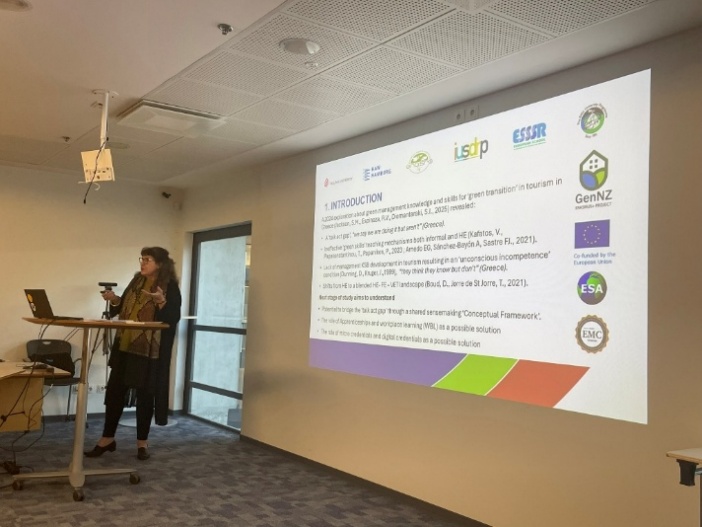
The abstract of research report was accepted for presentation at the ‘Symposium on Micro-Credentials and Sustainable Development’, hosted at Tallinn University, Estonia 20- 21, February 2025, with potential for full publication later in 2025.
Activity 3: Design and Testing of Teaching Materials
Feedback-Driven Curriculum:
Building on survey and focus group feedback, EMC and ESA co-designed a modular curriculum tailored to real workplace needs. This curriculum is unique in its combination of “core” and “pick-and-mix” modules, integration of digital learning, and emphasis on regional and sectoral context.
Summer School Pilot:
A highlight is the 8-week, 28-hour online/on-demand Summer School, open to 20 participants from each country. Slovenian participants will gain access to:
- Four stand-alone training modules (in Slovenian, Greek, and English)
- Live and recorded webinars with sector experts
- Real-world assignments, including workplace-based projects and alternative assessments for remote learners
- Personalized reflection and tutor support
Get all the details about the upcoming GENNZ Summer School 2025 here.
